Power Quality Consulting Engineers
Tadbir Energy Sepehr: Power Quality and Harmonic Filter Engineering Consultants
Tadbir Energy Sepehr Consulting Engineers, led by managers and specialists with more than 20 years of experience in analysing power quality parameters, measures and analyses disturbances in the electrical networks of industries and distribution companies and delivers practical solutions to improve them.
- Field measurement with power analyzers
- Accurate simulation with specialised electrical software
- Results checked against Iranian electricity industry standards

Why Tadbir Energy Sepehr?
Our engineering team holds advanced degrees from reputable universities and has completed a wide range of power quality projects for industries and electricity distribution companies in many cities.
More than 20 years of experience
Our managers and specialists have spent over two decades analysing power quality parameters.
Trusted by industry and utilities
Power quality consulting for industries and electricity distribution companies in many cities.
Remote monitoring
Power analyzers installed and monitored in many cities, with all data consolidated over GPRS.
Standards-based analysis
Measurement and simulation results are compared against Iranian electricity industry standards.
Engineering services
Power Quality Engineering Services
Services in power quality and electrical network performance that Tadbir Energy Sepehr has delivered:
Power quality measurement
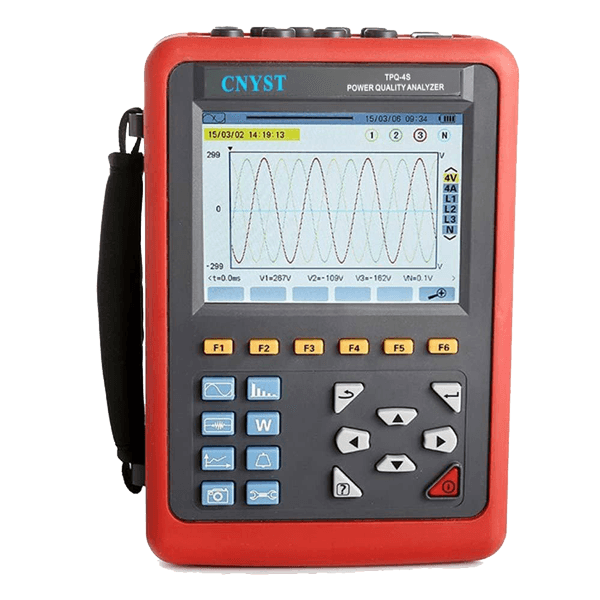
On-site installation of instruments and field measurement of power quality parameters in networks and industrial facilities.
Power quality analysis and pollution-source tracing
Analysis of power quality parameters and identification of the direction of pollution sources at large regional grid customers.
Harmonic studies and harmonic filters
Identifying harmonic distortion and resonance risk, and proposing practical solutions to reduce them.
Power analyzer installation and monitoring
Continuous network monitoring with all measurement data consolidated over a GPRS system.
Diversity factor and earthing systems
Determining the optimal diversity (simultaneity) factor and reviewing earthing systems.
Arc and induction furnace performance
Measuring and analysing furnace power quality and proposing practical improvements.
Why improve power quality
Why Does Power Quality Matter?
Power quality has become increasingly important for industrial and commercial consumers, especially because today’s production and control processes depend on equipment that is highly sensitive to fluctuations and power quality disturbances.
Power quality is usually defined as the ability of the electrical network to deliver clean, stable current: a continuous supply that is always available. The current should have a pure sinusoidal waveform and stay within permitted voltage and frequency limits.
No real-world energy source is ideal. In today’s networks, the growth of non-linear loads and other disturbing loads means deviations from these ideal conditions are always present.
Today’s production and control processes rely on computer-based equipment that is highly sensitive to fluctuations and power quality disturbances. With new generators and technologies entering the grid, electricity generation has also become more complex, creating new challenges for network operators.
The steady spread of power electronic equipment, and its key role in production processes, increases harmonic distortion in the network. Harmonics, voltage distortion and resonance are among the most important power quality concerns in industry, and developing industries in particular need to study these issues.
Poor power quality can cause serious losses for businesses and the economy and, at worst, can threaten human life in highly sensitive environments such as hospitals.
Good power quality saves cost and energy. The direct benefit is lower energy costs and tariffs; the indirect benefit is protection against equipment damage and premature wear, and against the loss of production, data and jobs. Power quality can affect a company’s overall performance, a fact that is unfortunately easy for managers to overlook.
Power quality parameters are rarely studied in Iran. Measuring power quality, analysing its parameters, finding the causes of degradation and ultimately improving electrical power quality are among the core services of Tadbir Energy Sepehr, because if these issues are not taken seriously they can cause irreparable losses to industry.
First, after a site visit to the electrical network or industrial equipment, instruments are installed and field measurements are taken. Once problems are assessed and identified, detailed simulations are carried out with specialised electrical software and presented in a report. To confirm the results, field measurements are compared with the simulation results and with Iranian electricity industry standards, and practical solutions are then proposed to correct and improve power quality parameters.
For power quality improvement advice, contact the engineers at Tadbir Energy Sepehr.
Less damage to equipment
Distortion and voltage fluctuations damage devices and shorten their service life.

Higher energy efficiency
Good power quality reduces losses and improves the efficiency of energy use.

Grid stability
Prevents instability, outages and quality degradation in the distribution network.
Lower repair and maintenance costs
Fewer equipment failures mean lower service and repair costs.

Better performance of sensitive equipment
IT, medical and industrial systems need stable, distortion-free power.
Avoiding economic losses
Poor power quality causes production stoppages and financial losses.

Compliance with standards
Networks and industries must meet international power quality standards.

More reliable systems
Quality power improves continuity and confidence in network operation.
Power quality disturbances
Types of Power Quality Disturbances
Power quality, meaning the stability and purity of network power, is vital to the reliability and efficiency of an electrical system; poor management of it can lead to energy losses, equipment failure and network instability.
Poor power quality can harm large industrial and commercial facilities, hospitals, data centres, banks and sensitive medical equipment, from slower production and more waste to burnt-out sensitive equipment, lower efficiency and higher energy use. The three most common categories are voltage sags and swells, voltage transients and harmonics.

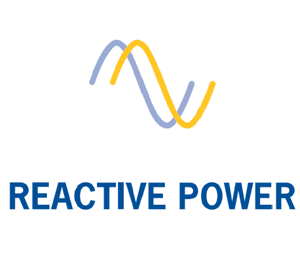
Reactive power
The phase angle between voltage and current in an AC system; used to build the magnetic field in motors, and the cause of a low power factor.
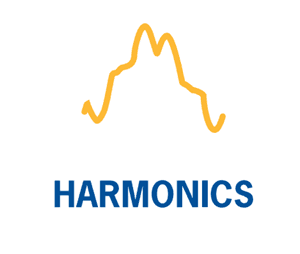
Harmonics
Integer multiples of the supply frequency: the 5th harmonic of a 50 Hz supply is 250 Hz. Caused by loads such as variable-speed drives and UPS systems.
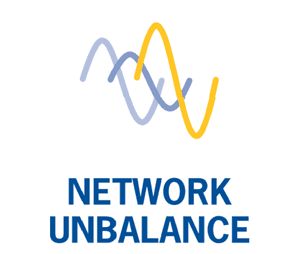
Network unbalance
Differing phase voltages caused by single-phase loads, phase-to-phase loads and unbalanced three-phase loads such as welding equipment.
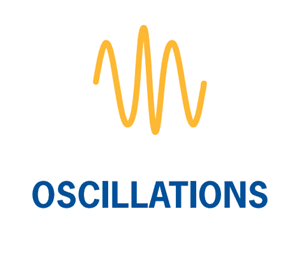
Resonance
Oscillating energy exchange between the magnetic field of an inductor and the electric field of a capacitor, which can amplify harmonic distortion when capacitor banks are present.
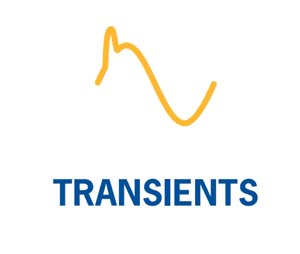
Transients
Rapid changes in the sinusoidal voltage and current waveforms caused by equipment switching and the start-up and shutdown of high-power loads.
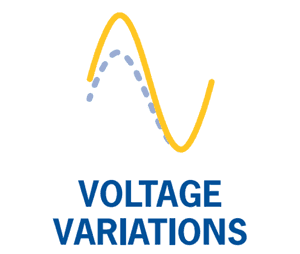
Voltage variations
Including dips, sags, swells and brown-outs, caused by network faults, changing capacitive loads and overloading.

Flicker
Random or repetitive voltage variations caused by mills, electric arc furnaces (EAF), welding equipment and shredders.
Harmonic filters
Harmonic Filters and Waveform Distortion
Because of their non-linear characteristics, adjustable-speed drives and switch-mode power supplies generate harmonic currents. These currents interact with the frequency response of the system and produce harmonic voltage distortion, which can lead to:
- Malfunction of control systems
- Capacitor failure
- Overheating of motors and transformers
- Higher system losses
- Amplified resonance when capacitor banks are present
Technical note: harmonic filters, whether passive or active, are used to reduce the harmonic currents drawn by non-linear loads. The choice of filter type, rating and tuning depends on the measurements and harmonic study of each specific network, particularly when capacitor banks are connected and resonance is possible.
In its power quality and harmonic filter projects, Tadbir Energy Sepehr first establishes the harmonic condition of the network through measurement and simulation, then proposes a practical solution tailored to that network.

How projects are delivered
Our Approach to Power Quality Projects
These steps follow the service description of Tadbir Energy Sepehr.
Site visit
Inspecting the electrical network or industrial equipment and its operating conditions.
Field measurement
Installing instruments and measuring power quality parameters on site.
Analysis and simulation
Analysing the data and running detailed simulations in specialised electrical software.
Validation against standards
Comparing measurement and simulation results with Iranian electricity industry standards.
Report and practical solutions
Delivering a report with practical solutions to correct and improve power quality.
Field records
Events Recorded in Tadbir Energy Sepehr Projects
The images in this section are real events recorded during Tadbir Energy Sepehr power quality and harmonic filter projects. Click any image to view it in detail.
Voltage sags and swells
As power electronic equipment becomes more sensitive, voltage swells and momentary voltage sags have become the most common power quality problems. Variable-frequency drives, computers, office equipment and programmable controllers are highly sensitive to these events.
They typically occur when a temporary fault hits the utility system, or when a large load is switched off or a large capacitor bank is switched in, so that the voltage level falls or rises. The result can be equipment failure, lower efficiency and disruption to the production line.
The images show voltage and current changes during a voltage dip event.
Voltage transients
A voltage transient is a power quality disturbance that can carry very high, destructive current or voltage, reaching thousands of volts and amperes even in low-voltage systems. These events last only an extremely short time, from under 50 nanoseconds to 20 milliseconds, and only power quality instruments can record them.
Drives, computers, data centres and other electronic loads are highly sensitive to transient voltages, and their tolerance is often lower than that of loads such as motors and transformers. The main concern is transients caused by load switching, especially switching of reactive-power compensation capacitor banks, and their effect on the voltage profile.
Harmonics
Because of their non-linear characteristics, adjustable-speed drives and switch-mode power supplies generate harmonic currents that interact with the system’s frequency response and produce harmonic voltage distortion.
This distortion can cause control malfunctions, capacitor failure, overheating of motors and transformers, and higher losses. Capacitor banks complicate the problem further and can increase resonance and the level of harmonic distortion.
The images show sample harmonic currents in a 400 V industrial system and a 20 kV metal smelting plant.
Knowledge center
Power Quality and Harmonic Filter Articles
The latest technical and educational articles from Tadbir Energy on measuring, analysing and improving power quality and on the use of harmonic filters.
Power quality articles
Introduction and understanding of power quality and its importance: ensuring efficient and reliable electricity supply
Maintaining high power quality in a power distribution system
Power quality enhancement techniques and maintain power quality
۷ technologies for power quality improvement
Tadbir Energy Sepehr site is being updated
Harmonic filter articles
Introduction and understanding of power quality and its importance: ensuring efficient and reliable electricity supply
Maintaining high power quality in a power distribution system
Power quality enhancement techniques and maintain power quality
۷ technologies for power quality improvement
Tadbir Energy Sepehr site is being updated
Latest articles
Introduction and understanding of power quality and its importance: ensuring efficient and reliable electricity supply
Maintaining high power quality in a power distribution system
Power quality enhancement techniques and maintain power quality
۷ technologies for power quality improvement
Tadbir Energy Sepehr site is being updated
Have the Power Quality of Your Network Assessed
For advice on measuring and improving power quality, harmonic studies and harmonic filters, get in touch with our engineers through the Tadbir Energy Sepehr platform.